Shockwave Therapy
Does Shockwave Therapy Really Work?
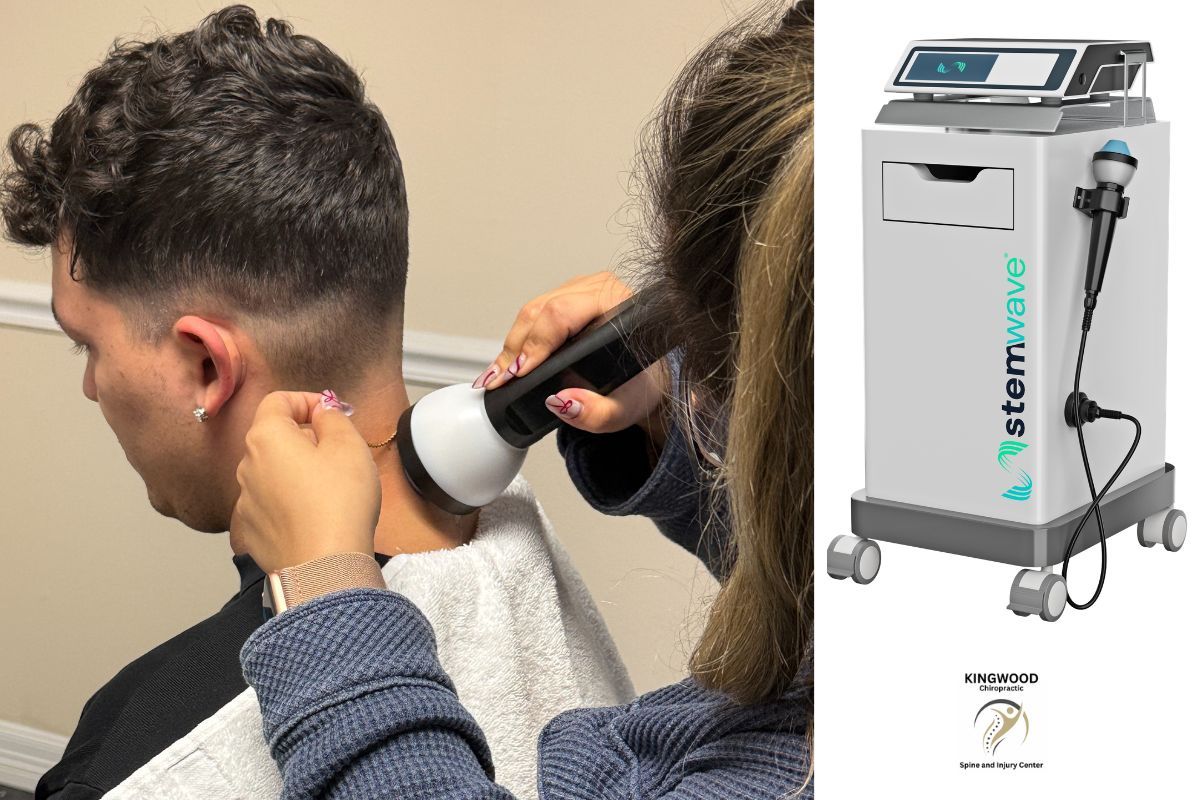
For the right condition and the right patient, focused shockwave therapy delivers measurable results — backed by decades of research and used worldwide. Here's what you need to know.
Quick Insights
- Shockwave has been researched and used worldwide for decades
- Effective for plantar fasciitis, Achilles tendonitis, tennis elbow, rotator cuff, frozen shoulder, and chronic tendon pain
- Many patients begin noticing improvement within 3 treatments
- Stimulates tissue healing — not just symptom masking
- May help patients avoid injections, long-term medications, or surgery
The Science
How Shockwave Triggers Healing
Focused acoustic waves set off a cascade of biological responses that restart healing in chronically injured tissue.
Increased Blood Flow
Chronic injuries often have limited circulation. Shockwave stimulates new blood vessel formation and improved tissue perfusion.
Growth Factor Activation
The treatment encourages release of growth factors that support tissue repair and regeneration at the cellular level.
Scar Tissue Remodeling
Chronic injuries develop dysfunctional scar tissue. Shockwave helps remodel damaged tissue and improve overall tissue quality.
Cellular Regeneration
Acoustic waves stimulate cellular activity that supports healing. Improvement often continues for weeks after the final session.
Pain Reduction
As tissue function improves and inflammation decreases, most patients experience significant and lasting pain relief.
Best Candidates
Pain lasting 6+ weeks, failed conservative treatments, wanting to avoid injections or surgery — these are the patients who respond best.
What We Treat
Conditions That Respond Well
Shockwave therapy is most effective for chronic soft-tissue and tendon injuries where healing has stalled. In our experience, the most predictable results occur with:
- Plantar fasciitis — stubborn heel pain from inflamed fascia
- Achilles tendonitis — chronic Achilles pain from overuse or prior injury
- Tennis & golfer's elbow — lateral or medial epicondylitis
- Rotator cuff tendinopathy — chronic shoulder tendon pain
- Calcific tendinitis — calcium deposits causing pain and limited motion
- Frozen shoulder — restricted shoulder mobility from adhesive capsulitis
- Patellar tendonitis & chronic knee pain — jumper's knee and related conditions
- Chronic neck & back pain — persistent myofascial pain and trigger points
Common Questions
Frequently Asked Questions
Is shockwave therapy scientifically proven?
Yes — numerous studies have demonstrated positive outcomes for chronic tendon and soft-tissue conditions. It has been used in clinical practice worldwide for decades.
How many treatments will I need?
Most patients require 3–6 treatments. Chronic conditions may need additional sessions. Dr. Hamel sets a clear plan at your first visit so you know exactly what to expect.
Does shockwave therapy work immediately?
Some patients notice improvement after the first treatment. Others improve gradually over several weeks as the healing response continues after each session.
Can shockwave therapy be painful?
Mild discomfort during treatment is normal and signals the acoustic energy is reaching the target tissue. It typically resolves quickly after each session.
Can shockwave therapy help me avoid surgery?
In many cases, yes. Many patients pursue shockwave before considering surgery. We'll be direct with you if your condition genuinely warrants a surgical evaluation.
How does it compare to cortisone injections?
Cortisone primarily reduces inflammation and pain. Shockwave is designed to stimulate actual tissue healing. Many patients choose shockwave because they want to encourage repair, not repeatedly suppress symptoms.
Is there any downtime after treatment?
Minimal. Most patients return to normal activity the same day, with possible temporary soreness in the treated area.
Who is not a good candidate?
Certain conditions make shockwave inappropriate — acute injuries, active infection, certain medical conditions, or recent corticosteroid injections. A thorough evaluation determines candidacy.
Ready to Find Out?
Stop Managing Pain. Start Healing.
If you've tried everything else and still can't get relief, shockwave therapy may be what your injury actually needs. Dr. Hamel will evaluate your case honestly and tell you if it's the right fit. Same-week appointments available.