Welcome to our guide on shockwave therapy
. It's known for fast relief of many conditions. We'll dive deep into what this therapy is, how it helps, and its healing powers for musculoskeletal conditions such as frozen shoulder, shoulder impingement syndrome, rotator cuff tendinitis, tennis elbow, golfer’s elbow, knee pain, knee osteoarthritis, bone on bone knee pain, Achilles tendinitis and plantar fasciitis.
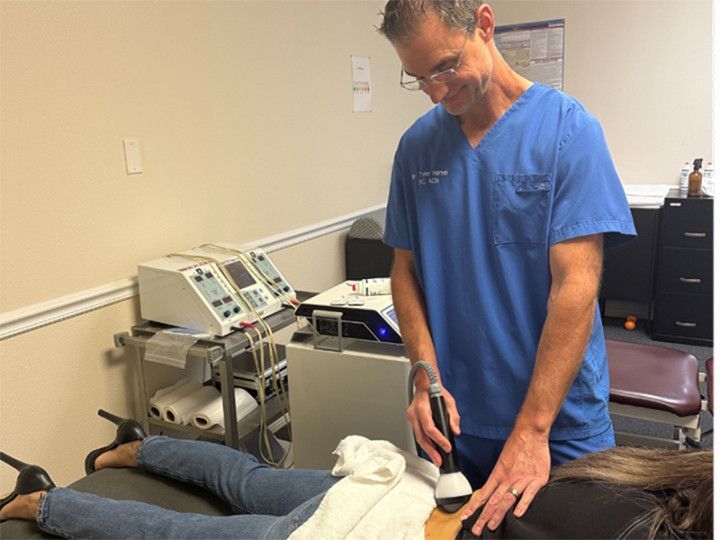
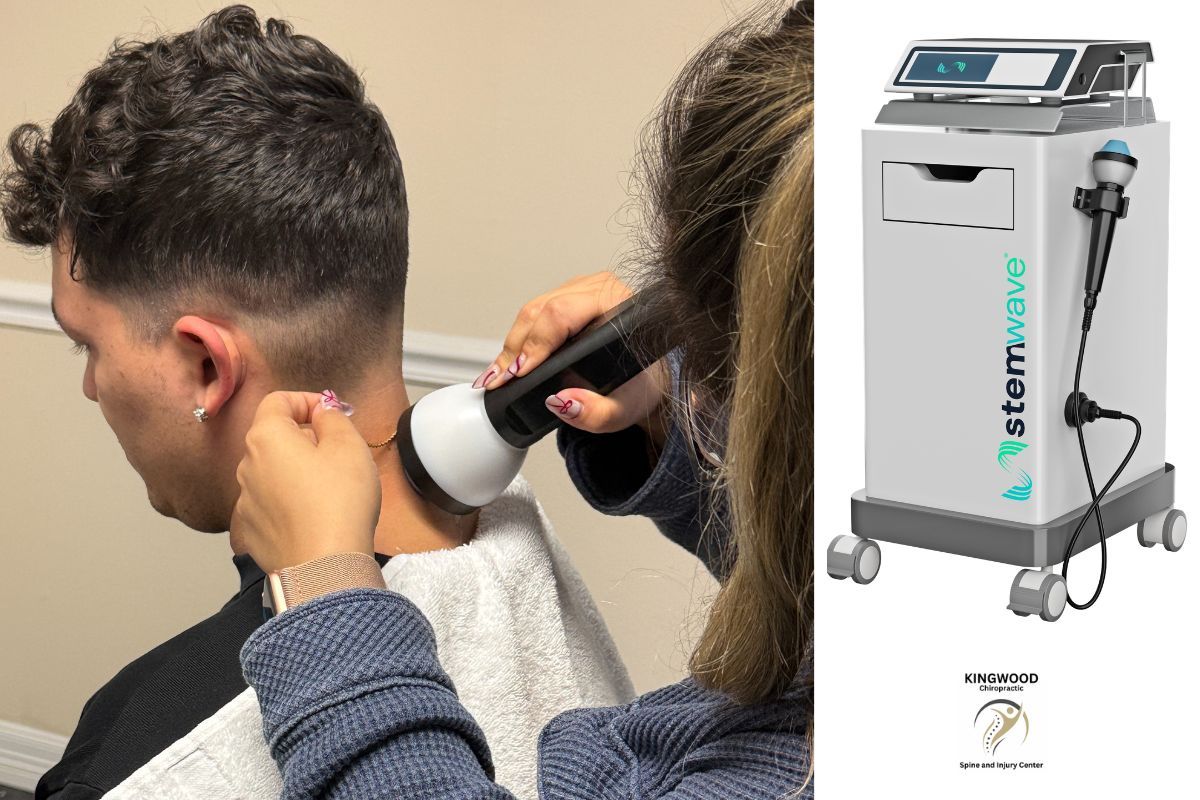
Kingwood Chiropractic uses extracorporeal shock wave therapy (ESWT). This means the shockwaves (or soundwaves) are dispersed by a wand through ultrasound gel to penetrate deep into the joints, ligaments, and tendons of the shoulder, knee, hip, elbow, and ankle.
The Mechanism of Shockwave Therapy
Shockwave therapy is non-invasive. It uses high-energy sound waves that penetrate deep into the joint area and help accelerate healing by decreasing inflammation, improving circulation, and recruiting stem cells in the area. This is a great alternative for patients considering surgery for shoulders, knees, carpal tunnel, elbows, or hips.
How Does Shockwave Therapy Work?
The machine creates a spark and sends sound waves to the area needing help. These waves create tiny irritation in the tissues, stimulating a healing response. The keys to optimizing healing and repair are threefold:
- Reduced inflammation – specifically in the area of pain, such as the shoulder joint, knee joint, or tendons. Chronic inflammation prevents healing and can worsen damage.
- Improved blood circulation – lack of circulation can delay healing. Shockwave therapy brings blood, oxygen, and nitric oxide to the injured area, speeding recovery.
- Recruitment of stem cells – sound waves help recruit existing stem cells to accelerate healing. This is not a stem cell injection; it uses the body’s natural stem cells in the area.
Targeting Specific Areas for Healing
Shockwave therapy
can focus exactly where it’s needed. Dr. Hamel sets the intensity of the waves and how many pulses an area will receive. The sound waves target injured or damaged tissues like cartilage, ligaments, tendons, meniscus, joint surfaces, and muscles. This is why it works well for conditions like tendonitis, osteoarthritis, rotator cuff/impingement syndrome, knee pain, and plantar fasciitis. The treatment is non-invasive, and patients may feel some irritation (around 4-5/10) as part of the healing process. It is safe for all ages, with adjustments for growth plates in younger patients.
Why Choose Shockwave Therapy?
Shockwave therapy is great for acute or chronic pain because it naturally stimulates healing and repair. It’s non-invasive and delivers strong shockwaves to heal the body from the inside. Many patients see 5-15% improvement after the first visit in both pain relief and range of motion. Patients of all activity levels benefit, from athletes to gardeners.
Therapy sessions are quick, typically 10-15 minutes. No long recovery times are needed. Initial healing takes about 6-8 weeks, with pain-free activities, stretches, and exercises recommended during that period.
It’s important to go to a skilled professional. Shockwave therapy accelerates healing but requires participation in proper rehabilitation and recovery.
In short, shockwave therapy
is ideal for long-term pain or recent injuries. Key benefits include:
- Non-invasive – no surgeries, side effects, or downtime.
- Natural healing – promotes recovery from the inside out.
- No drugs or shots required.
- Proven effectiveness for conditions like frozen shoulder, knee pain, Achilles tendinitis, and plantar fasciitis.
- Quick and convenient – starts at 2X per week, tapering to 1X per month for maintenance.
Shockwave therapy is great for patients over 40, active in sports or hobbies, wanting to avoid surgery, and committed to following therapy protocols and corrective exercises.
Seeking Shockwave Therapy Near Me
If you’re in pain and want a natural solution, shockwave therapy is a good option. Look for experienced providers like Dr. Hamel who know where to administer shockwaves, recommend exercises, and provide nutritional guidance.
Other ways to find a clinic include asking trusted sources for referrals, checking reviews, and searching online for "shockwave therapy near me". Make sure the provider focuses on musculoskeletal conditions, not unrelated applications like skin or erectile dysfunction.
Shockwave therapy treatments are broken down into three phases:
- Phase 1 – reduce inflammation: 10 treatments over 6-8 weeks. Healing occurs once inflammation is gone.
- Phase 2 – regenerative therapy: 24-36 visits over 90-120 days. Muscles, tendons, and joints repair and function better.
- Phase 3 – full repair and functionality: strengthen and stabilize the area, allowing pain-free activity without limitations.
At Kingwood Chiropractic, the initial visit includes an exam, thermal scan for inflammation, first shockwave treatment, nutritional recommendations, and corrective exercises.
Conclusion
Shockwave therapy is cutting-edge, non-invasive, and helps with musculoskeletal injuries and chronic pain. It uses acoustic shockwaves to promote healing and repair without surgery or medication. The therapy targets specific injured areas, reduces inflammation, improves circulation, and supports long-term tissue regeneration.
FAQ
What is shockwave therapy?
Shockwave therapy uses strong acoustic waves to help your body heal without surgery or medication, reducing pain and promoting healing of muscles, ligaments, joints, and tendons.
How does shockwave therapy work?
It sends strong sound waves to the area of pain, triggering natural healing by reducing inflammation, improving oxygenation, and recruiting stem cells to regenerate damaged tissue.
What conditions can be treated with shockwave therapy?
Muscle and joint pain, plantar fasciitis, osteoarthritis, tennis elbow, Achilles tendinitis, and other acute or chronic musculoskeletal conditions.
Is shockwave therapy non-invasive?
Yes, no incisions or surgery are involved. Shockwaves are delivered externally through a wand and ultrasound gel.
How long does a session last?
Typically 10-15 minutes. The number of sessions depends on the injury and severity; some conditions may require weeks or months of treatment.
Is shockwave therapy painful?
It may be slightly uncomfortable, but most patients tolerate it well. Intensity can be adjusted by the provider.
How soon can I feel relief?
Many patients notice a 5-15% improvement after the first session, with cumulative benefits over 6-8 weeks.
Is shockwave therapy suitable for everyone?
Not for everyone. Contraindications include pregnancy, cancer, blood clotting issues, and recent cortisone injections. Pediatric treatments avoid growth plates.
How do I find a reputable clinic?
Look online, check networks of doctors, visit websites or social media, and read patient reviews. Ensure the clinic specializes in musculoskeletal applications.
Is shockwave therapy covered by insurance?
Most insurance companies do not cover shockwave therapy. It is considered an alternative treatment, often paid out-of-pocket by patients seeking natural pain relief.