If you're dealing with tendon pain and inflammation, you're not alone. Many people, from athletes to office workers, face this issue. But, there's hope - shockwave therapy can help you heal your injured tendons and soft tissues.
This therapy uses regenerative medicine to boost your body's healing. It sends high-energy waves to the affected area. This can lessen pain and help fix damaged tendons and soft tissues. It's shown to be effective for many sports injuries, like tendinopathies and plantar fasciitis.
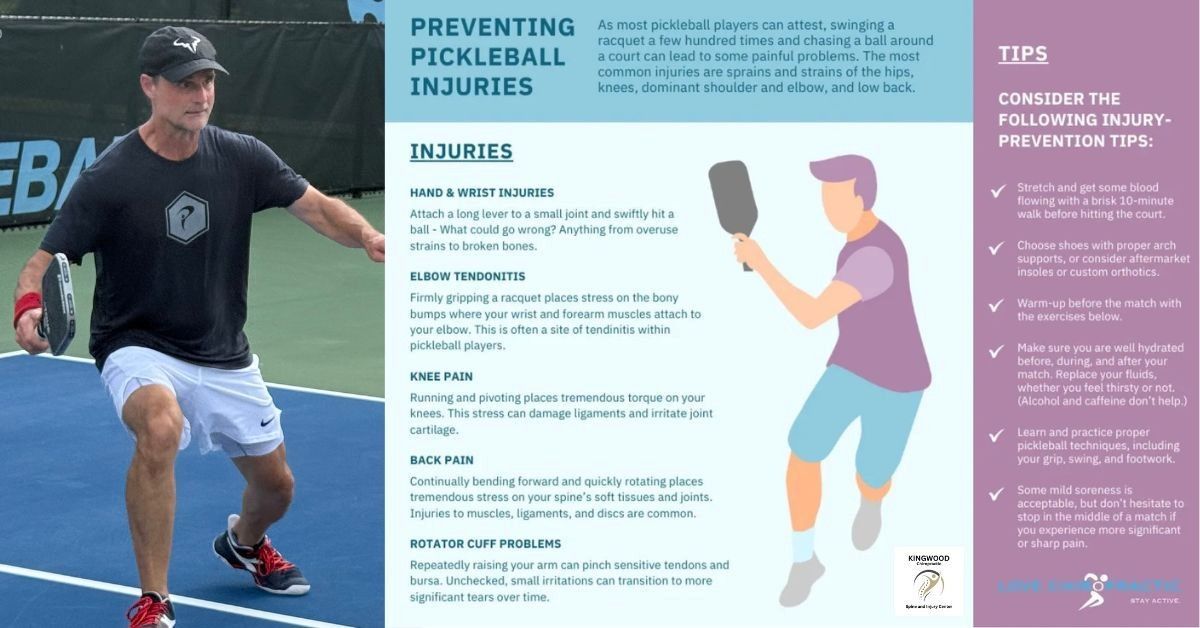
Most tendinitis is due to overuse type of activities, this is very common is sports like swimming, tennis, cross-fit, running, pickleball and baseball. These sports use repetitive motions that irritate tendons, the tendons can only do so much work before they get inflamed; chronic inflammation turns into tendinitis. You know you have tendinitis in your knee, shoulder, wrist or foot because you will have a constant, irritating pain in those areas; especially with movement. There are plenty of muscle and tendon balancing exercises that can be done to take unwanted stress off of tendons, but to quickly get rid of inflammation naturally, shockwave therapy is one of the best choices today. In the coming months we are going to see extracorporeal shockwave therapy become the go to treatment for tendinitis and arthritis because of how easy it is to administer, little to no downtime and you don't have to worry about bad side effects or medicine or surgery.
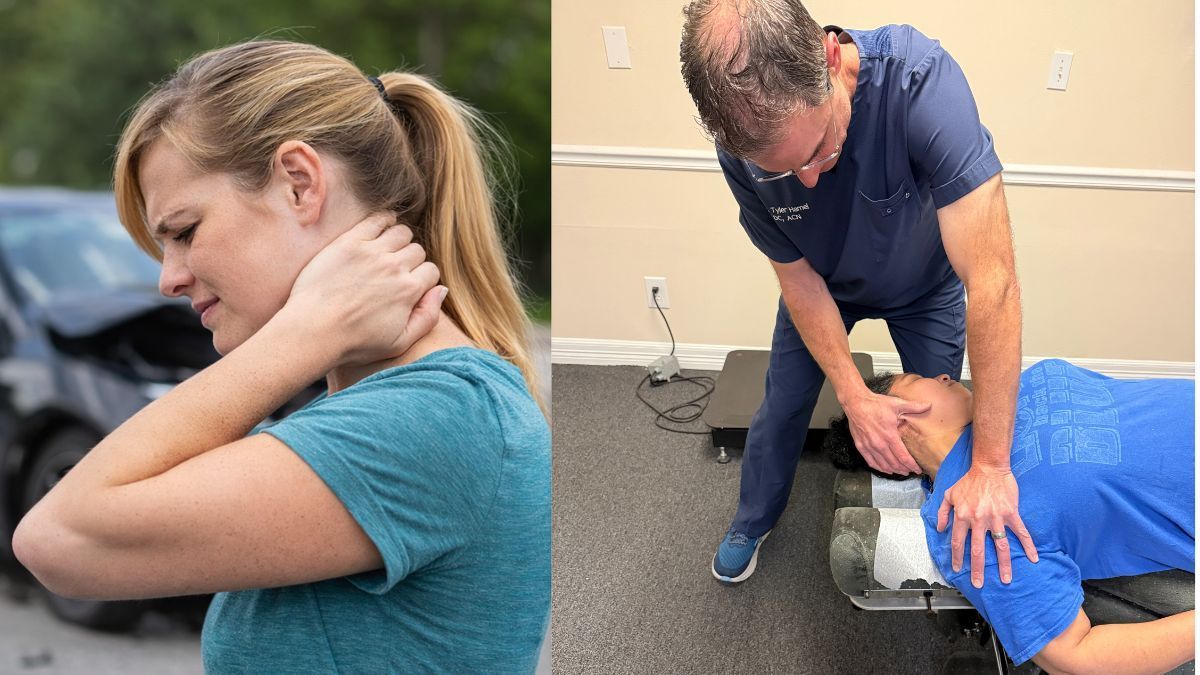
Yes, a lot of athletes and people who exercise have tendinitis, but how about the rest of the population, tendinitis is still a big problem. We see postural stress in the workplace causing tendinitis and pain in the shoulders, knees and neck. Postural stress is an overuse injury, if you sit at a computer for 6-8 hours a day; this is repetitive overuse and it will cause injury to your cervical, thoracic and lumbar spinal joints. There are so many tendons in your body, postural stress will inflame a lot of them.
If you are struggling with the relentless pain of tendinitis? Imagine finding relief without surgery or endless medications. Shockwave therapy for tendinitis
offers a proven, non-invasive solution that targets the root of your pain, speeding up recovery and restoring your mobility. Don’t let tendinitis hold you back any longer—discover how this cutting-edge treatment can change your life, call your local provider today to start your journey to pain-free living.
Key Takeaways:
- Shockwave therapy is a non-invasive, pain-relieving treatment for tendinitis and other sports injuries and postural stress injuries.
- It stimulates the body's natural healing process by delivering focused, high-energy acoustic waves to the affected area.
- Shockwave therapy can reduce pain and improve functionality for a wide range of tendinopathies, from tennis elbow to Achilles' tendinitis.
- Studies have shown significant improvements in pain, functionality, and quality of life after shockwave therapy.
- Shockwave therapy is often combined with other treatments, like physical therapy, or chiropractic care for enhanced healing and recovery.
What is Shockwave Therapy?
Shockwave therapy is a new, non-invasive treatment that uses high-energy sound waves to kickstart healing. This method is changing how we treat injuries, offering hope for those with musculoskeletal problems who are not interested in surgery or taking strong pain medicine and muscle relaxers.
Shockwave Therapy Promotes Tissue Regeneration
A shockwave therapy session involves a device that sends shockwaves deep into the injured area. This boosts blood flow, reduces inflammation and releases growth factors. These factors help create new blood vessels, speed up healing and regenerate damaged tissues.
The therapy also helps break down hard deposits like calcifications and scar tissue which helps to significantly ease pain. It's a non-surgical option for treating things like tennis elbow, knee osteoarthritis, frozen shoulder and plantar fasciitis. It's a great choice for those who are looking for alternatives to mainstream medicine's surgery and prescription medication.
| Shockwave Therapy Mechanism | Therapeutic Benefits |
|---|---|
| • Increased blood flow and growth factor release | • Non-invasive treatment |
| • Neovascularization and tissue regeneration | • Accelerated healing of tendons, bones, and soft tissues |
| • Breaking down of calcified deposits | • Reduced pain and improved functionality |
| • Nerve stimulation to reduce pain | • FDA-approved for specific musculoskeletal conditions |
Shockwave therapy is a powerful tool for those facing musculoskeletal issues, tendinitis and joint injuries. It helps people get back to an active, pain free life style without worries about having to get major surgery.
Sports Injuries Treated with Shockwave Therapy
Shockwave therapy is a great way to treat sports injuries without Cortisone shots or surgery. It helps athletes and active people heal faster and improve mobility. This therapy is used for many musculoskeletal issues, like foot, knee, shoulder, hip, wrist and elbow problems.
Some sports injuries that benefit from shockwave therapy include:
- Foot pain: Plantar fasciitis and Achilles' tendinopathy
- Knee pain: Patella tendinopathy (jumper's knee), and knee osteoarthritis
- Leg pain: Hamstring injuries, quadriceps tears and IT Band syndrome
- Hip pain: Rectus femoris and lateral hip pain with gluteal tendinopathies
- Elbow pain: Little League elbow, tennis elbow and golfer's elbow
- Shoulder pain: Rotator cuff injuries, frozen shoulder, biceps tendinitis
Shockwave therapy sends penetrating focused sound waves into the area of injury. This can help accelerate the body to heal and repair more effectively. It's a non-invasive treatment that doesn't require surgery, anesthesia, medication or downtime. This makes it a great choice for athletes who want to recover quickly and get back to their sports.
| Sports Injury | Shockwave Therapy Benefits |
|---|---|
| Plantar Fasciitis | Reduces pain, improves mobility, and promotes healing of the plantar fascia |
| Achilles' Tendinopathy | Decreases inflammation, enhances tendon regeneration, and restores function |
| Patellar Tendinopathy | Alleviates knee pain, improves jump performance, and facilitates tissue repair |
| Hamstring Injuries | Accelerates healing, reduces recovery time, and helps prevent future injuries |
| Rotator Cuff Injuries | Relieves shoulder pain, enhances range of motion, and supports tissue regeneration |
Shockwave therapy helps athletes and active people recover from many sports injuries. It lets them get back to their activities faster and with less pain. This treatment is a proven way to deal with tendinopathies, muscle strains, and other injuries from sports. Whether you are an athlete or not, you want to get back to do pain free activities like walking, running, playing pickleball, hiking, playing with your kids or your bowling league.
"Shockwave therapy has been a game-changer for many of my patients who are active in sports. It's a safe, non-invasive way to tackle common injuries and get them back to their peak performance."
- Dr. Sarah Johnson, Sports Medicine Specialist
Shockwave Therapy for Tendinitis
If you're dealing with the pain and discomfort of tendinitis, shockwave therapy could be the answer. This treatment uses high-energy waves to kickstart your body's healing. It helps ease the symptoms like pain and inflammation of this common injury from overuse.
How Shockwave Therapy Works for Tendinitis
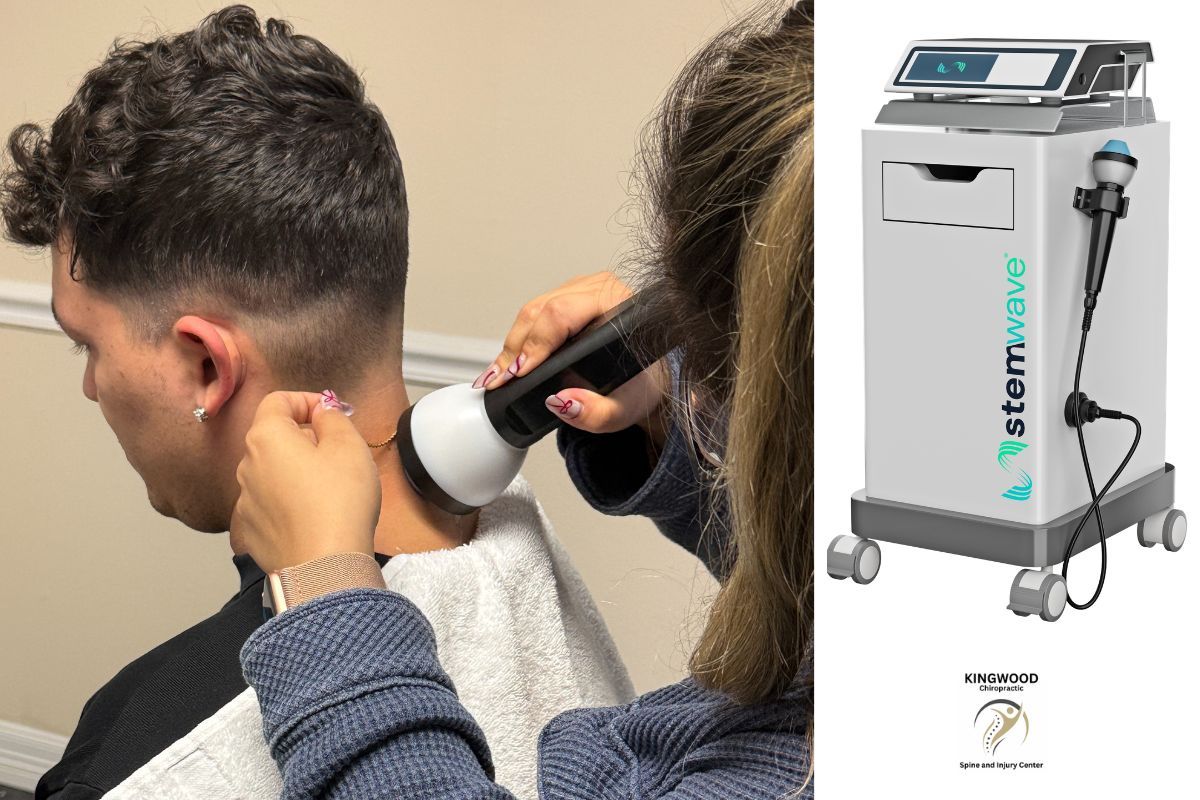
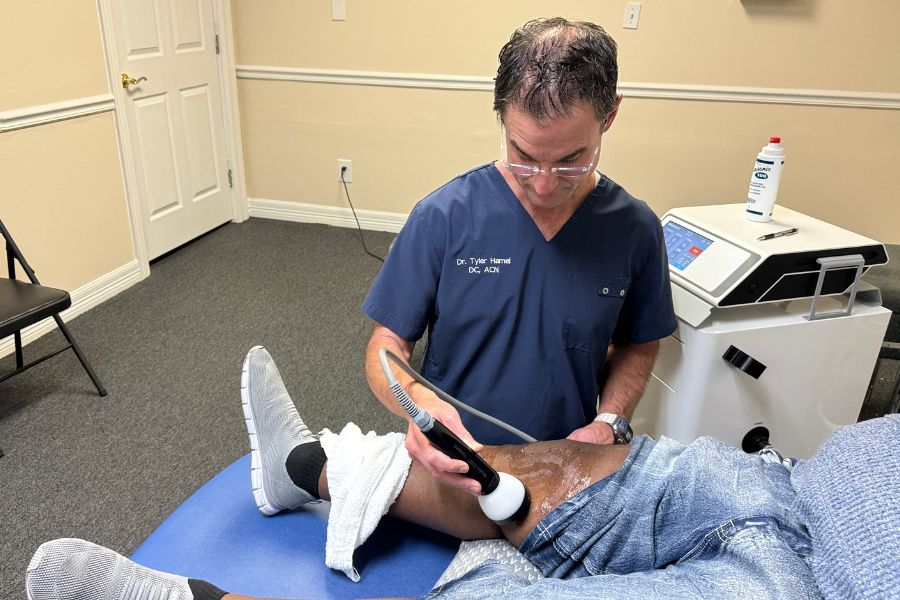
Your clinician will use a device to send shockwaves into your skin near the injured tendon during a session. These waves go deep into the tissue, joint and surrounding musculature. They increase blood flow, bring in more oxygen and stem cells to the area, and release growth factors. This reduces inflammation, breaks down scar tissue, and speeds up healing of the tendon.
Types of Shockwave Therapy
- Focused Shockwave Therapy: This method sends a precise beam of waves right to the injured area like the meniscus of the knee, the supraspinatus tendon of the shoulder, the plantar fascia of the foot.
- Radial Shockwave Therapy: This uses a wider pattern of waves to treat a bigger area.
Both focused and radial shockwave therapies can help with tendinitis. They help to reduce inflammation, get rid of pain and improve movement. Your clinician will choose the best one for you, the two best companies making shockwave therapy for doctors’ offices are StemWave and Softwave.
"SoftWave therapy offers a 61% to 91% improvement in musculoskeletal and general pain complaints."
Shockwave therapy, or ESWT, is a proven and safe way to treat chronic and painful tendinitis. It's backed by top health organizations like the UK's NICE and the FDA in the US. This therapy uses shockwaves to give you the relief you need to beat tendinitis. Talk to your local shockwave therapy provider to see if you and your injuries would be a good candidate for the treatment.
The Shockwave Therapy Process
Shockwave therapy for tendinitis is a non-invasive treatment. It uses high-energy sound waves to help heal and lessen pain in injured tendons and soft tissues. A sports medicine physician, chiropractor, physical therapist or orthopedic doctor gives this treatment. A clinician holds a special device against the patient's skin during a shockwave therapy session. This sends shockwaves right into the injured area, the whole treatment takes about 5-10 minutes. Patients usually need 8-10 sessions over a few weeks, based on how bad the injury is.
Understanding the Types of Shockwave Therapy
There are two main types of shockwave therapy for treating tendinitis and musculoskeletal issues:
- Focused Shockwaves: This method uses low-energy impulses that hit the affected area right on target. Sessions last 5-10 minutes. Depending on the injury, the doctor will use 500-1000 pulses to stimulate healing and repair.
- Radial Shockwaves: This newer type sends shockwaves at lower levels into the tissue, covering a wider area.
Both focused and radial shockwave therapies work well to help heal and ease pain from tendinitis and other soft tissue injuries.
| Shockwave Therapy Type | Description | Treatment Duration |
|---|---|---|
| Focused Shockwaves | Uses low-energy impulses targeted at affected areas | 5-10 minutes |
| Radial Shockwaves | Aims lower levels of shockwaves into tissue locations | Varies |
Whether it's focused or radial shockwave therapy, the aim is to kickstart the body's healing process. It helps ease pain and discomfort from tendinitis and other musculoskeletal issues. The goal for most patients is to be able to be active with little to no pain; this is the main outcome the shockwave therapy provider is looking for.
"Shockwave therapy is a non-invasive treatment that can effectively promote healing and reduce pain in injured tendons and soft tissues."
Benefits and Effectiveness of Shockwave Therapy
Shockwave therapy is a top choice for treating tendinitis and musculoskeletal injuries. It has shown to greatly reduce pain and boost functionality in patients. Doctors are realizing how important it is to help heal and repair injuries and tendinitis instead of just giving medicine to make the patient feel better.
Pain Reduction and Improved Functionality
Those who try shockwave therapy often see a significant drop in pain and improved mobility. They feel less pain by at least two points on a five-point scale right after and four weeks after treatment. This is true for many issues like plantar fasciitis and rotator cuff tendinopathy. It doesn't just ease pain. Shockwave therapy also makes patients move better and gets them back to doing the things, activities and hobbies they love to do.
Proven Effectiveness in Studies
Many studies have looked into how well shockwave therapy works for tendinitis and other musculoskeletal issues. A review of 45 studies found it really helps with pain for many musculoskeletal conditions like:
- Plantar fasciitis: It cut pain by an average of -1.63 points.
- Lateral epicondylitis: Pain went down by an average of -0.63 points.
- Chronic Achilles tendinopathy: Pain was reduced by an average of -1.38 points.
- Rotator cuff tendinopathy: Pain was cut by an average of -2.37 points.
These studies show how effective shockwave therapy is in easing pain and helping with movement for people with tendinitis and other issues. With tendinitis, the sooner you can reduce inflammation, the quicker it will heal, this is what ESWT does so well, without surgery or medicine.
Conclusion
Shockwave therapy is a top choice for treating tendinitis and other joint injuries without surgery. It helps by stimulating the body's healing process by bringing in stem cells, growth factor, oxygen and nitric oxide. ESWT can significantly reduce pain and tendinitis within a few visits allowing patients to be more active and pain free with their daily activities like golf, gardening, walking and playing with their grandkids.
If you're facing issues like plantar fasciitis, frozen shoulder, or tennis elbow, shockwave therapy could be your answer. Studies show it works well, with success rates between 65% and 88.7% for different tendon problems. Thinking about trying shockwave therapy? Talk to a sports medicine expert, orthopedic doctor, chiropractor or physical therapist. With its strong success stories, shockwave therapy might just be what you need to beat tendinitis and get back to your active life.
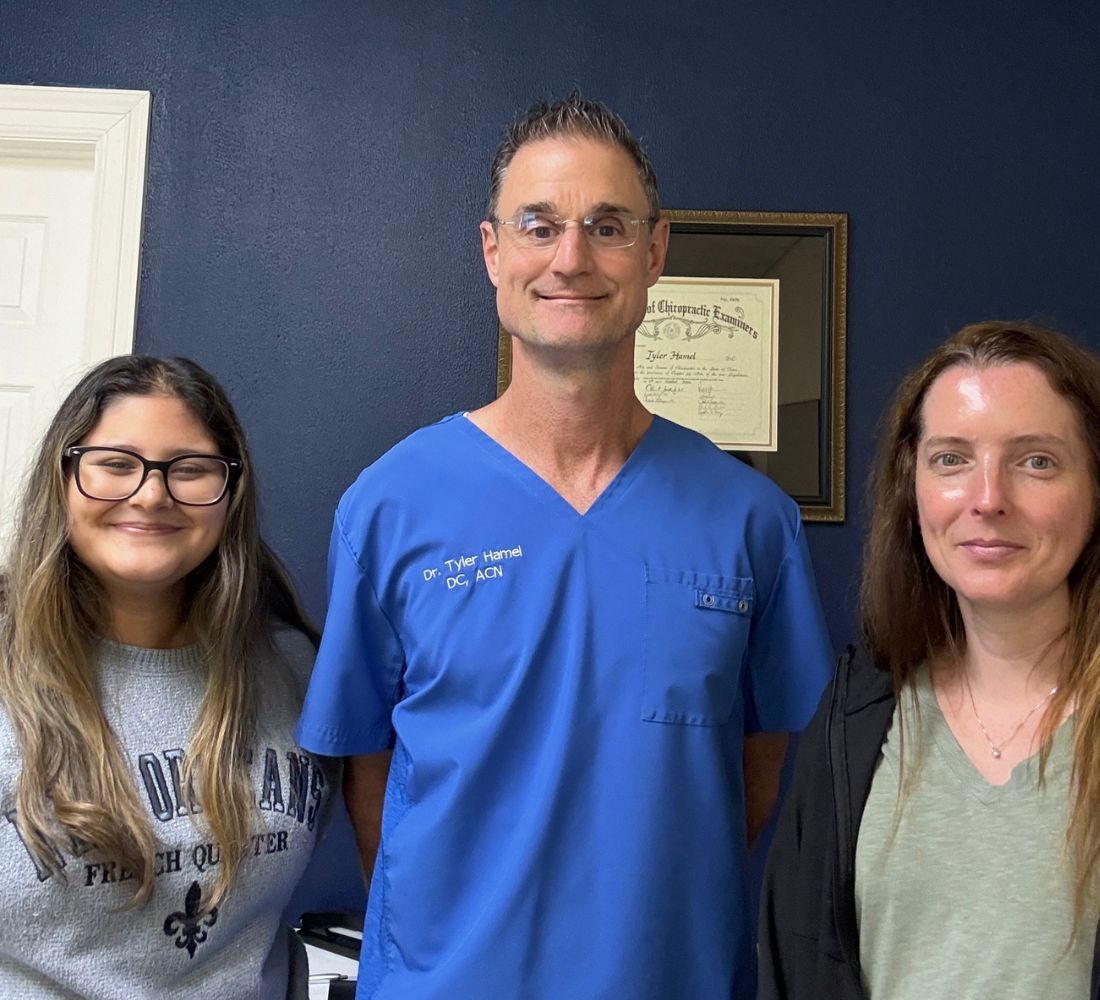
Testimonial for Hamel Chiropractic and Wellness in Kingwood, TX
"I’ve seen Dr. Hamel previously for neck and back pain, he fixed me up pretty good. Lately I had been suffering with rotator cuff problems in my left shoulder from playing tennis, and a sprained ankle. I didn’t really want to take medicine or get any kind of pain shots, so I was looking for something different. One of my friends recommended shockwave therapy, I looked it up, and Dr. Hamel was the only one in the Kingwood area providing shockwave treatments. I’ve been going in getting shockwave therapy 2x/week for about 6 weeks and my pain has decreased significantly. The shockwave therapy is not painful and helped me stay on the tennis court during my recovery. I have full range of motion in my swing without tightness/pain. My friends and I definitely recommend Dr. Hamel and his shockwave treatments for anyone suffering with shoulder pain, knee pain, ankle pain or plantar fasciitis; it just works!! There isn’t another therapy like this and no other doctors offer shockwave therapy in our north Houston area. Thanks again Dr. Hamel, I will be back in soon". CF-Kingwood, TX
FAQ
What is shockwave therapy?
Shockwave therapy is a type of regenerative medicine that uses high-energy sound waves to stimulate the body to heal naturally. A device sends shockwaves, through the skin and into the injured tissues during treatment. The treatment lasts around 5-10 minutes and is used to accelerate healing for all types of tendinitis and joint injuries.
How does shockwave therapy promote healing?
This therapy helps by stimulating the body to make new blood vessels and reduce inflammation. The waves also promote the releasing or oxygen nitric oxide and growth factors. These factors improve blood flow and help new cells grow which helps to regenerate tissues.
What types of sports injuries can shockwave therapy treat?
It treats many sports injuries, like plantar fasciitis and Achilles' tendinopathy. It also helps with patella tendinopathy, hamstring injuries, and rotator cuff injuries. Many sports injuries are overuse injuries, whether it be jumping, throwing squatting, bending or running; this causes wear and tear on the tendons and muscles, often times causing inflammation.
How does shockwave therapy work for treating tendinitis?
The clinician uses the shockwave device on the skin over the injured tendons. This increases blood flow and growth factors, helping to heal the tendons. With tendinitis, in order to heal, you need to boost blood flow and reduce inflammation, shockwave therapy helps to do this.
What is the shockwave therapy treatment process like?
The doctor will put some ultrasound gel on your skin around the area of your injury or tendinitis. The shockwave therapy machine makes a pulsating sound, it creates sound waves that flow through the ultrasound gel and into the injured area. You will feel the shockwaves coming into the area; the regions that you have healthy tissue and no injury you won't feel much, the regions where you have tendinitis arthritis or inflammation you will feel a lot more. The discomfort you feel is the process of healing beginning, it is a good thing and all patients should feel this during their session. Treatment lasts about 5-10 minutes. Depending on the severity of the injury a patient might get 10 visits over 6-8 weeks, more serious conditions may need 24 sessions over 120 days. The body needs time to heal and repair; rest and listening to your doctor's recommendations is key to a successful outcome.
How effective is shockwave therapy?
Studies show it's very effective in reducing pain and improving function. Patients often see a 5-15% improvement in pain levels and mobility after the first treatment. With each successive treatment, more healing and tissue repair happens; most patients do really well after 8-10 sessions.
How long does it take shockwave therapy to work?
For the majority of patients coming in with tendinitis, arthritis, knee pain, plantar fasciitis, lumbar disc pain or frozen shoulder, most feel a 5-15% improvement after the first shockwave therapy session. These improvements are noted in decreased pain and also improved mobility where the injury is. For full healing to take place, expect 6-8 weeks of therapy, most providers use the treatment protocol of 10 visits to reach the expectations of the patients. For more severe conditions like chronic pain from low back surgery, complete tears of rotator cuff, bone on bone knee pain for knees, and chronic scar tissue can take longer, sometime 120 days or more for maximum recovery. Keep in mind that some patients just want to get out of pain so that they can play with their grandkids, others are wanting to get back into competitive cross-fit games or professional pickleball tournaments. It all depends on where patients want to go says Dr. Hamel; they might require more or less treatment.
Source Links
- https://www.ncbi.nlm.nih.gov/pmc/articles/PMC6029898/
- https://www.childrenshospital.org/treatments/shockwave-therapy
- https://utswmed.org/medblog/sports-injuries-shockwave-therapy/
- https://www.webmd.com/pain-management/what-is-shockwave-therapy
- https://complete-physio.co.uk/services/shockwave-therapy/
- https://fullcircleorthopedics.com/blog/shockwave-therapy-for-orthopedic-and-sports-injuries-in-phoenix/
- https://www.reagansportsmed.com/2022/11/11/advantages-of-shockwave-therapy-for-tendinopathy/
- https://www.ncbi.nlm.nih.gov/pmc/articles/PMC10093829/
- https://www.mayoclinic.org/medical-professionals/physical-medicine-rehabilitation/news/the-evolving-use-of-extracorporeal-shock-wave-therapy-in-managing-musculoskeletal-and-neurological-diagnoses/mac-20527246
- https://softwaveclinics.com/conditions/tendonitis/
- https://valehealthclinic.co.uk/types-of-tendonitis-that-shockwave-therapy-can-treat/
- https://my.clevelandclinic.org/canada/services/shockwave-therapy
- https://www.webmd.com/pain-management/what-is-extracorporeal-shockwave-therapy
- https://www.ncbi.nlm.nih.gov/pmc/articles/PMC9845689/
- https://bmcsportsscimedrehabil.biomedcentral.com/articles/10.1186/s13102-024-00884-8
- https://www.ncbi.nlm.nih.gov/pmc/articles/PMC9382436/
- https://josr-online.biomedcentral.com/articles/10.1186/1749-799X-7-11
- https://www.blackberryclinic.co.uk/articles/can-shockwave-therapy-help-treat-tendinopathy/